Precision AI for the next herbicide.
Phyllox discovers novel herbicide modes of action for the resistant weeds breaking modern agriculture — molecules superweeds have never seen.
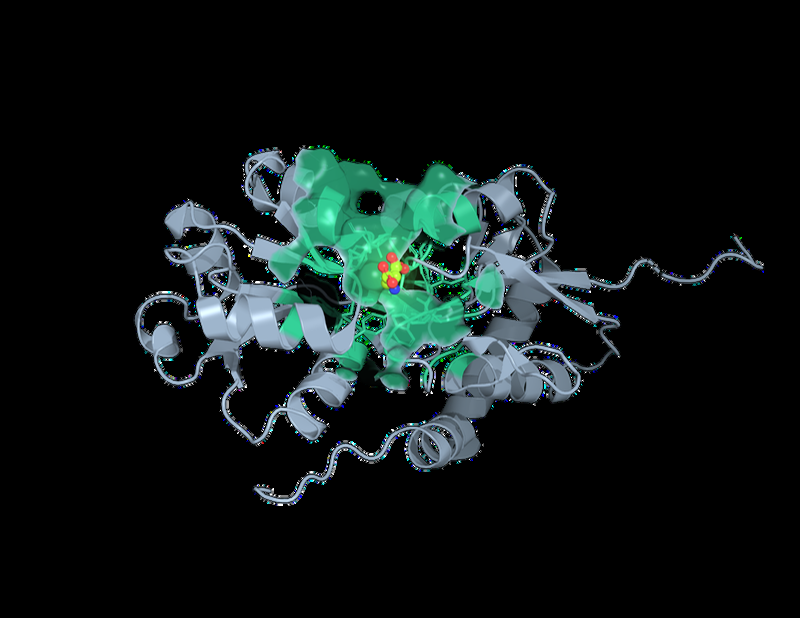
GLR3.4 · drag to rotate
Phyllox discovers novel herbicide modes of action for the resistant weeds breaking modern agriculture — molecules superweeds have never seen.
Superweeds now shrug off entire classes of herbicides across the world's biggest cash crops.
Roughly a quarter of a $40B global market is breaking down as existing chemistry stops working.
No new herbicide mode of action has reached the market in three decades. The pipeline has run dry.
We point the AI at the GLR3.4 binding pocket — a new, unexploited herbicide target class.
Protein-language models predict which novel molecules bind, across billions of candidates in silico.
Candidates are scored and shortlisted by predicted binding, selectivity, and synthesizability.
Top hits are confirmed in the wet lab — predictions become real, working chemistry.
Validated modes of action are licensed to the major agriculture companies that need them.

Independent science researcher (TRP pain-receptor channels). 1st, IFT Nutmeg & PepsiCo Engineering Awards. 1st at HackPrinceton. Researcher at Brown.

3× Regeneron ISEF Grand Award winner. 1st at JSHS '25, National STEM Champion '26, 1st in Applied Technology. Researcher at Yale.

IEEE-published AI/ML researcher (youngest author). 3M Young Scientist & GENIUS Olympiad gold, Science. 3rd at JSHS '25.
A pre-seed round to take Phyllox from validated targets to confirmed, licensable hits — capital goes straight into compound synthesis, wet-lab assays, and field validation.